 |
Blackface!The mask which the actor wears is apt to become his face -- Plato Blackface is more than just burnt cork applied as makeup. It is a style of entertainment based on racist Black stereotypes that began in minstrel shows and continues today. |
|
Blackface!The mask which the actor wears is apt to become his face -- Plato Blackface is more than just burnt cork applied as makeup. It is a style of entertainment based on racist Black stereotypes that began in minstrel shows and continues today. |
|
Racist Black StereotypesOriginating in the White man's characterizations of
plantation slaves and free blacks during the era of minstrel shows (1830-1890), the
caricatures took such a firm hold on the American imagination that
audiences expected any person with dark skin, no matter what their
background, to conform to one or more of the stereotypes: | |
 |
 |
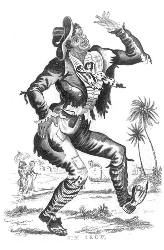
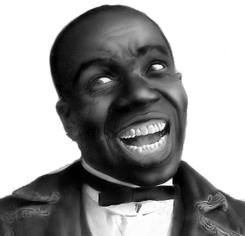
| Jim Crow
The term Jim Crow originated in 1830 when a
White minstrel show performer, Thomas "Daddy" Rice, blackened his face with
burnt cork and danced a jig while singing the lyrics to the song, |
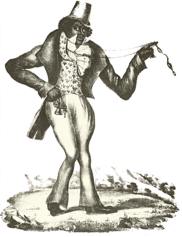
Zip Coon
First performed by George Dixon in 1834, Zip Coon made a mockery of free blacks. An
arrogant, ostentatious figure, he dressed in high style and spoke in a
series of *malaprops and puns that undermined his attempts to appear dignified. |
| Jim Crow and Zip Coon eventually merged into a single stereotype called simply "coon." | |
 |
 |
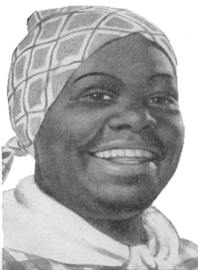
| Mammy
Mammy is a source of earthy wisdom who is fiercely independent and brooks no backtalk. Although her image changed
a little over the years, she was always a favorite of advertisers. |
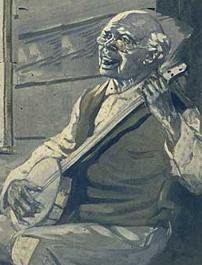
Uncle Tom
Toms are typically good, gentle, religious and sober. Images of Uncle Toms were another favorite of advertisers. |
| PepsiCo (Aunt Jemima syrup and pancake mix) and Mars (Uncle Ben's Rice) finally announced in 2020, that they were removing the characters that began as minstrel show stereotypes from their packaging and brands. | |
 |
 |
| Buck
The Buck is a large Black man who is proud, sometimes menacing, and always interested in White women. |
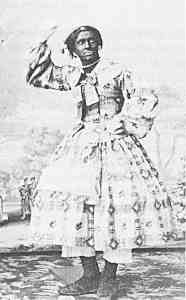
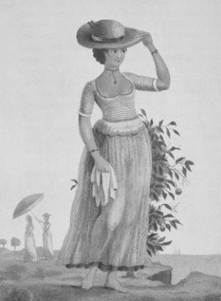
Wench/Jezebel
The temptress. During the minstrel era, wenches were typically a male
in female garb. In film, wenches were usually female mulattos. |
 |
 |
| Mulatto
A mixed-blood male or female. In film, often portrayed as a tragic figure who either intentionally or unintentionally passes for White until they discover they have Negro blood or are discovered by another character to be Black. |
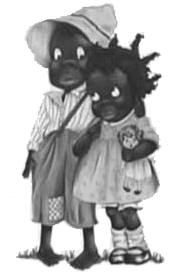
Pickaninny
Picaninnies have bulging eyes, unkempt hair, red lips and wide mouths into which they stuff huge slices of watermelon. |
|
These stereotypes were staples during the minstrel era and carried over into vaudeville, film and television.
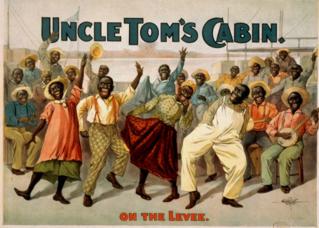
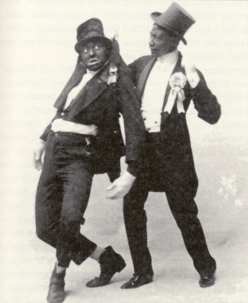
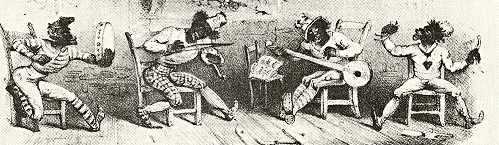
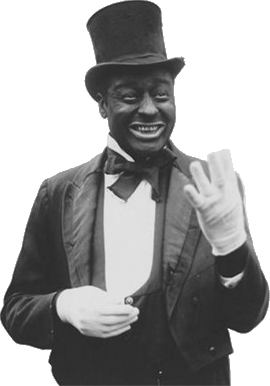
Blackface in Minstrel ShowsBlackface makeup was either a layer of burnt cork on a layer of coca butter or black grease paint. In the early years exaggerated red lips were painted around their mouths, like those of today's circus clowns. In later years the lips were usually painted white or unpainted. Costumes were usually gaudy combinations of formal wear; swallowtail coats, striped trousers, and top hats. Minstrel show entertainment included imitating black music and dance and speaking in a "plantation" dialect. The shows featured a variety of jokes, songs, dances and skits that were based on the ugliest stereotypes of African American slaves. From 1840 to 1890, minstrel shows were the most popular form of entertainment in America. White audiences in the 19th Century wouldn't accept real black entertainers on stage unless they performed in blackface makeup. One of the first Blacks to perform in blackface for White audiences was the man who invented tap dancing, William Henry Lane, aka Master Juba. Lane's talent and skill were extraordinary and eventually he became famous enough that he was able to perform in his own skin. In the late 1800s one of the most popular of the blackface performances was the adaptation of Uncle Tom's Cabin; an antislavery tale, it met with few objections even from anti-theater religious leaders. A mixture of minstrel show, circus, and spectacle; with trained dogs, ponies, and sometimes even a crocodile, it remained the most popular play in America for over a century.
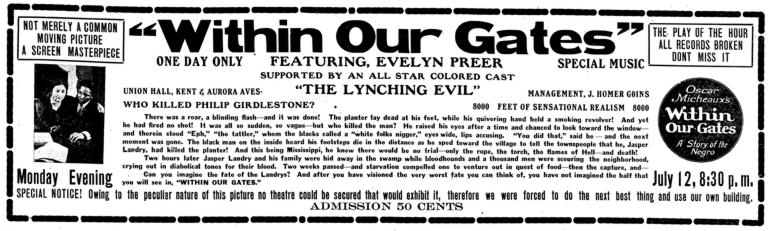
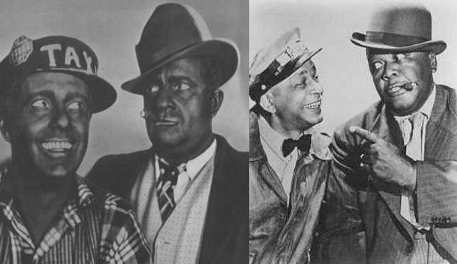
The American minstrel show was effectively dead by WW1, yet some old-timers continued to peddle the same blackface stereotypes later in vaudeville, films and television. It's one of the interesting twists of history that in the first half of the twentieth century, the main purveyors of the old-fashioned blackface minstrel tradition were Black performers, who'd began in show business wearing the blackface mask -- either literally or figuratively -- and were reluctant to give it up. But they also had little choice in the roles they
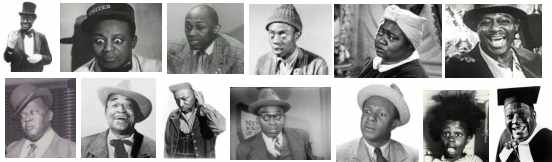
were offered. Until well into the 1950s, Black male actors were limited to stereotypical roles: Coons, for example, Stepin Fetchit, Mantan
Moreland, and Willie Best; and Toms, the most
famous were Bill "Bojangles" Robinson and Eddie "Rochester" Anderson.
Likewise, the only film roles for Black women were maids and mammys, and
the most famous mammy of all was Hattie McDaniel,
best known for her Oscar-winning role as "Mammy" in Gone
With the Wind. VaudevilleVaudeville was popular in the United States from the 1880s until the early 1930s. It offered a more family-friendly atmosphere than the variety shows that had come before, which catered mostly to rowdy working-class audiences. Vaudeville began at Tony Pastor's Opera House in New York's Bowery. By 1900, it had become a nationwide network of hundreds of theaters and was the dominant form of American mass entertainment. Each show was a variety of separate, unrelated acts -- short plays, musicians, acrobats, animal acts, dancers, magicians, and comedy routines -- grouped together on a common bill. For a time, vaudeville was the most popular form of live theater but it died out with the advent of talking pictures. Many of the 20th Century's most famous performers got their start in Vaudeville including Eddie Cantor, Al Jolson, Charlie Chaplin, The Marx Brothers, WC Fields, Jack Benny, and Bob Hope. The heritage of blackface minstrelsy played a major part in the evolution of the song, dance, comedy acts and routines that vaudeville popularized, but actual performances in blackface were mostly relegated to a single skit or a song. However blackface in vaudeville also provided opportunities for Blacks who performed in blackface. The success of Black comedians such as Ernest Hogan, Bert Williams, and George Walker opened the door for multiracial casts and for later black performers to take the stage without blackface.
|
|
Blackface montage from Spike Lee's Bamboozled (2000) |
Tyler Perry, currently the most prolific Black producer, director, actor, writer, and one-man multimedia conglomerate has populated many of his stories with classic stereotypes. Perry's recurring mammy character, Mabel "Madea" Simmons appears in much of his work and is played in drag by Perry himself. Perry first introduced Madea in his 1999 play I Can Do Bad All By Myself and the character has appeared in many of his subsequent films. Perry has said he based Madea on an aunt who lives in Georgia, as well as on his mother and several other women he knew from his childhood.
In 2009, director Spike Lee criticized Perry's work, saying, "Each artist should be allowed to pursue their artistic endeavors but I still think there is a lot of stuff out today that is 'coonery' and buffoonery...As African Americans, we're not one monolithic group so there is room for all of that, but at the same time, for me, the imaging is troubling and it harkens back to Amos 'n' Andy." Perry has bristled at the criticism but he also has gone on to much more serious work, producing with Oprah Winfrey the critically acclaimed, Push: Based on the Novel by Sapphire, an uncompromising look at one Black girl's journey from sexual, physical and mental abuse, and teen pregnancy to adulthood and independence.
Blackish, (2014-2022) is a sitcom about a father of four who worries that his four children aren't "black enough" -- they are losing touch with urban, black culture because of their affluent upbringing. The show confronts notions of blackness as well as certain behaviors that are considered "black" and the fact that many black people feel the need to embody those attributes because if they don't, they won't be considered authentically black. What makes Blackish unique is its strong writing and irreverent look at the issues facing an upper class black family. This broad, warm-hearted comedy confronts issues of race, class and culture every week as the father, played by Anthony Anderson, tries to toughen the kids up, because he thinks that if they don't get "blacker" he will have failed as a father.
Negative stereotypes of Blacks are a staple of Black music videos that glorify gangsterism. The "buck" is now a hoodlum with an attitude and the minstrel-show plantation has morphed into a music video version of gangster life. Though the setting has changed from an idyllic plantation to the mean streets of urban America, the process remains the same; a black culture is being marketed for profit, with black performers portraying negative stereotypes. Performers believe they are representing authentic black America, while critics decry the glorification of ugly caricatures and how it influences the attitudes and perceptions of Black youth.
In May 2018, Donald Glover, aka Childish Gambino turned the Jim Crow stereotype on its head with his music video This Is America -- confronting black minstrel stereotypes in the media, gangster rap, gun violence and police brutality. Gambino reminds us of the 2015 Charleston mass shooting, the Black Lives Matter movement, and America's tolerance of gun violence while dancing and striking poses that are reminiscent of Jim Crow. The video ends with Gambino running as fast as he can through a dark hall while being chased by white shadows. But no matter how fast he runs, they are still closing in on him. Gambino wants us to understand that for American blacks, racism and white supremacy are inescapable.
Because of the relative anonymity of online interactions, an increasing number of non-Black people have been masquerading as Blacks while using Black vernacular and portraying stereotypes from the minstrel era. Other examples of digital blackface include the proliferation of White people posting memes featuring news station videos of blacks that have been turned into caricatures.

At first glance, digital blackface may not seem that bad, but it is just another example in the long history of dehumanizing stereotypes that have been portrayed using each new entertainment media since the 1830s. It may be some time yet before we as a society evolve beyond this behavior, if ever, but as individuals we can be aware that there are real-world consequences to negative stereotypes and not perpetuate them.

History of Minstrel Shows
|
Blacks in Blackface -
|
|
|
|||||
|
|
Visit the Blackface! YouTube Channel for more blackface and minstrel show videos |
||||
|
|
|||||
Racial and Racist Stereotypes in Media |
|||||
 Blackface! Black Stereotypes |
 Yellowface! Asian Stereotypes |
 Brownface! Hispanic Stereotypes |
 Redface! Indian Stereotypes |
 Arabface! Arab Stereotypes |
 Jewface! Jewish Stereotypes |
|
|
|||||
| Please visit our partners: |
| Buy * Will Write for Food * T-shirts |
| Kachina.us - Guide to Hopi Kachina Dolls |
| Agile Writer -- Biography and History |
Copyright
Ken Padgett